
Screens, screens everywhere. It might be overstating things to say that digital signage is taking over physical retail. But there’s certainly doesn’t come as any surprise when you walk into a modern store and encounter a battery of screens of various shapes and sizes.
If the tech investment plans of major chains are anything to go by, the use of digital signage in shops is only going in one direction. In its last set of annual results, Sainsbury’s announced that the number of connected display screens (so not counting POS or kiosks) in its stores was close to reaching the 3,000 mark, with plans to roll out 3,000 more. The Co-op likewise announced that it had passed 1,000 ‘front-of-store’ digital displays in late 2025, along with 15,500 ‘digital advertising touchpoints’.
There’s a clear pattern here. Supermarkets and other large retail chains are investing heavily in digital displays for one major reason – advertising revenue. Retail media is fast becoming a goldmine for retailers with big enough footfall to make running their own advertising networks viable. Retail media spend in the UK is forecast to reach £4.8bn in 2026.
But if the growth in digital signage in retail is being driven by a desire to create more advertising opportunities, what’s in it for shoppers? Are we even in danger of screens detracting from the customer experience?
Luckily, digital displays can do a lot more than just show advertisements on an endless loop. And a lot of what they do benefits customers. This also explains why we’re seeing digital signage adoption increase among smaller retailers that don’t have the scale to embrace retail media.
Let’s explore how screens can add to the customer experience at two key stages of the shopping journey – discovery and consideration.
Helping customers find what they need
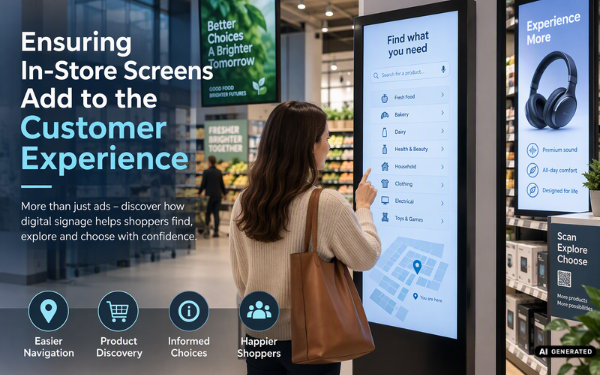
Great shopping experiences start with making it as easy as possible for customers to find the products, sections, departments or services they are looking for. Digital displays are perfect for this. ‘Wayfinding’ screens strategically located at entrances, around stairwells, escalators and lifts and at other transitional points around a store can help customers get their bearings, highlight what’s available and provide directions.
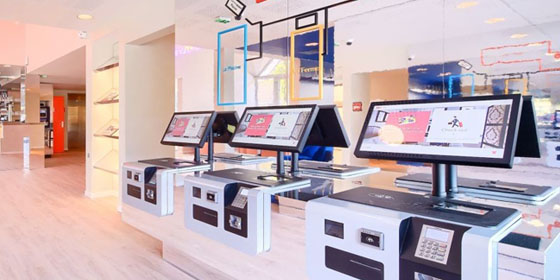
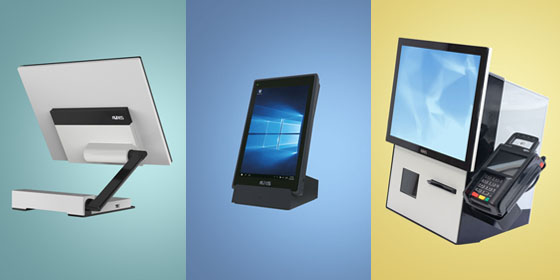
Digital screens beat static displays for this purpose in two important respects. One, you can make digital displays interactive. A screen might show a general floorplan or list main product sections by default. But by using touchscreens or voice UI, you can let customers ask for specific directions or look up individual products. This is also something smaller stores can take advantage of. You might not be big enough to justify having dedicated wayfinding displays. But you can still let customers look up products and where to find them on general-purpose displays and kiosks.
The other advantage of digital signage is that it’s easy to change the wayfaring information whenever store layouts and merchandising change. With platforms like Advantech’s SignageCMS, you can update display content the same way you would a website.
Helping customers make a confident choice
The beauty of introducing more and more digital technology into physical retail is that you can give shoppers the best of both worlds. They get the hands-on, immediate experience of finding, assessing and then taking home products they choose. But they can also have instant access to all the information about products that they get online.
Screens provide the natural window into this world of digital information. They can therefore play a key role in helping customers make an informed purchase decision. Content such as demonstration videos, comparison tools, Q&A-based buying guides and customer reviews can answer questions that packaging and shelf labels simply cannot.
Placement, relevance and interaction are all crucial. If you’re selling large gadgets or appliances, for example, it might be appropriate to have screens installed on every shelf playing feature demos. This is less suitable for a small fashion boutique, where spatial considerations might make it better to have dedicated ‘endless aisle’ kiosks where customers can browse an extended range, or interactive ‘mirror’ screens where they can digitally ‘try on’ samples via AR.
Another consideration is making screens display different content depending on which products a customer browses or touches. In-store intelligence systems like Advantech’s iVisionSuite make this possible by connecting digital signage to IoT sensors and vision AI, and using the customer behaviour data they capture to trigger what appears on the screen.
What’s important above all is ensuring every screen or display has a clear purpose and contributes to the customer experience in a meaningful way. Starting with what customers need to find, understand or do gives retailers a practical basis for deciding where to place screens, what content to display and what extra functions will add value. To learn more, get in touch with the ADVANTECH-AURES team.