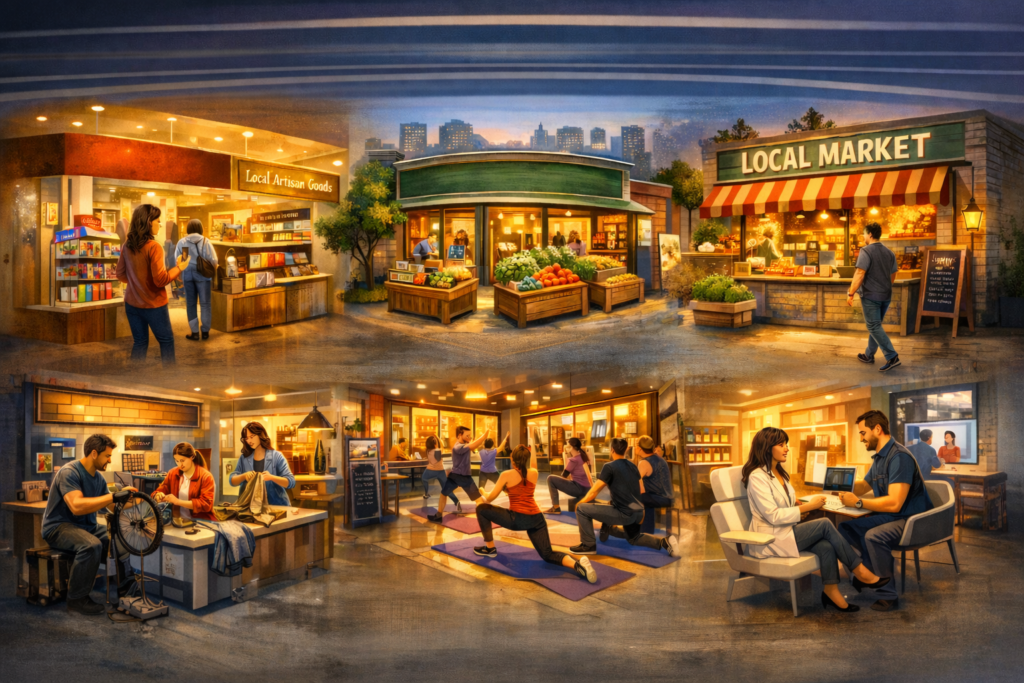
It has long been acknowledged that the future of physical retail depends on more than simply selling goods. While the apparent ‘threat’ posed to bricks-and-mortar stores by ecommerce is routinely (and often wildly) overstated, it’s undoubtedly true that online retail wins most head-to-head battles if all you’re looking at is the transactional side.
Quite simply, with notable exceptions like the convenience and grocery sectors, if consumers are looking to make a purchase as quickly and conveniently as possible, a few taps on their phone wins hands down over travelling to a shop.
But at the same time, speed and convenience aren’t the only things people want from retail. Consumers still value shopping as an experience – and a hands-on, in-person, social experience at that. Research consistently shows that shoppers across age groups – even younger ‘digital natives’ from Gen Z – value physical retail as a source of enjoyment.
Retailers have not been slow in responding to this vote of confidence from customers. Store formats have evolved markedly in recent years to foreground the experiential and even entertainment value of shopping in store rather than online. It’s very much an ongoing process, and it’s heartening to see the levels of energy and innovation store operators are putting into ensuring that their shops maintain a point of difference compared to their online channels.
Contrary to all the doom-and-gloom headlines about the decline of bricks-and-mortar retail, this level of innovation will make sure it survives long into the future. So in celebration of that, here are five examples of clever contemporary formats that will keep consumers flocking to stores throughout 2026 and beyond.
1. Shop-in-Shop
The concept of ‘nesting’ retail concessions in larger establishments is by no means new – department stores have been around since the 18th century, and there are lots of well-established store-in-store partnerships like the presence of Argos outlets in Sainsbury’s premises.
But it’s a model that is enjoying rapid growth. Boots has been at the forefront of the trend, adding everything from Mothercare to BUPA to dedicated beauty brand concessions to its store portfolio over the past five years. We’ve seen the format spark the revival of once well-loved retail brands lost to the high street, such as Toys R Us mini-stores in WH Smiths outlets and Paperchase in Next and Tesco stores. And it is fuelling a new wave of exposure for local and artisan brands (see below).
For retailers, shop-in-shop helps to combat high leasehold overheads – host stores get help paying the rent, tenants get floorspace without taking on the risk of leasing an entire building. The variety adds to the customer experience, with shoppers in effect getting two (or more) for the price of one in terms of the brands they can engage with in a single space.
2. Hyper-Local Store Formats
One of the things we’re seeing the shop-in-shop model lend itself to is large retail chains localising their offer by forming partnerships with local independent retailers in different areas. This might take the form of full concessions, or it might simply be a case of differentiating merchandising by city or region. In either case, this taps into growing consumer preferences for locally made products and brands.
We’re also seeing ‘hyper-localization’ of physical retail manifest itself in other ways. The Nike Rise store concept, for example, provides bespoke product selections and in-store experiences based on localised data taken from member accounts and app use.
3. In-Store Repair Stations
The days when product manufacturers could get away with making cheap products with a short lifespan explicitly with repeat replacement sales in mind are rapidly coming to an end. It’s not just a case of consumers cottoning on to how bad so-called planned obsolescence is from a sustainability perspective. As living costs rise, old values of ‘repair and make do’ are coming back into fashion. Because, ultimately, it’s more cost effective to invest in a high quality product and look after it over time than it is to have to keep replacing cheap products.
Smart brands are responding to this by prioritising durability and sustainability in the goods they make. Smart retailers, meanwhile, are tapping into customer sentiment by opening repair and maintenance stations for whatever products they sell. From UNIQLO’s in-store clothes mending and re-making services, to Currys Repair Labs for electrical goods, more and more physical retailers are adding value for customers by laying on ways to help them make their purchases last longer.
4. Lifestyle, Community, & Playground Hubs
The concept of retailtainment has been a key part of efforts to make the physical shopping experience more than transactional. As we’ve noted, shoppers across all age groups still view ‘retail therapy’ as a source of enjoyment. It’s not a case of physical retailers having to ‘make shopping fun again’, because to many people, it already is. But by adapting the experience to add elements of entertainment and socialisation, businesses can build on the pleasure people get from shopping, and give them even more reason to head to the shops.
One common way we’re seeing this manifesting itself is in stores hosting or even running clubs and community groups. This is a particularly strong trend in the sports and active wear clothing sub-category, with the likes of lululemon running local running clubs from its stores across the UK, and Gymshark hosting fitness classes. But it can cover everything from author book signings in book shops, cooking classes in homeware or grocery stores, gaming events in tech outlets – anything that helps turn shops into social destinations that drive footfall and increase dwell time.
5. Added Value Expertise
Getting the balance right on customer service can be tricky for retailers. On the one hand, a lot of people don’t like feeling pestered by over-attentive staff as they browse. However well-meaning the attention may be, many consumers automatically baulk at anything they consider ‘hard sell’ tactics. On the other hand, people appreciate expert advice and assistance when they can seek it on their own terms. And that’s a big reason why shoppers still choose to go to stores rather than buy online.
Retailers are meeting both needs by creating boxed off expert services for customers to access on demand. John Lewis, for example, has an extensive range of clienteling-type personal services, including personal shoppers, personal styling, beauty treatments, home design consultations and more. The idea is to shift the emphasis away from assistants approaching shoppers at random, and give customers control over the services they choose. It also means services can be better targeted, draw on higher levels of expertise and give more value to the customer. At their best, expert-led services become a reason for customers to go to a store in their own right, such as Charlotte Tilbury’s Skin Spa offering high-end dermatological treatments at its flagship Covent Garden store, or Apple’s Today at Apple in-store skills workshops.