


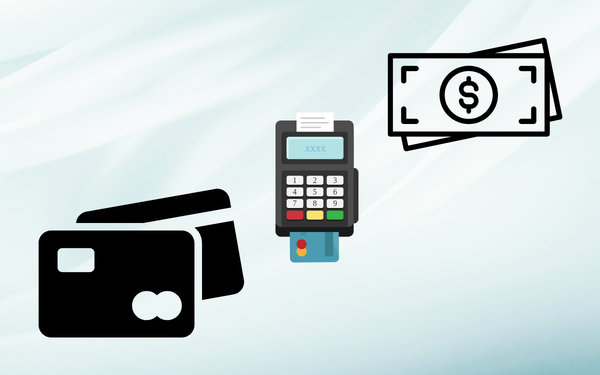
After nearly two decades of slugging it out in courtrooms, Visa and Mastercard believe they are close to closing out the epic antitrust battle over card payment interchange fees – otherwise known as ‘swipe fees’, or the commission merchants have to pay every time a customer uses a card to pay.
In November, the two card issuing giants announced they’d reached a $38bn settlement with attorneys leading the massive class action lawsuit brought against them for allegedly using their dominant market position to fix swipe fee prices. Interchange fees cost US merchants more than $100bn a year. Along with network and processor fees, card charges add up to the second highest cost for US retailers and hospitality businesses after labor.
Central to the antitrust suit is the controversial ‘Honor All Cards’ rule, which stipulates that merchants must accept all types of payment cards from an issuer if they accept any. This is despite the fact that issuers are free to set different fees for different cards – debit cards are typically the cheapest, with swipe fees in the range of 0.8% to 1.5%, while credit cards and premium rewards cards can push upwards of 3%. Issuers can raise revenues from swipe fees simply by pushing hard on premium card uptake.
In the settlement, Visa and Mastercard have agreed to waive the Honor All Cards rule, leaving merchants free to refuse cards at point of sale. They have also agreed to lower fees for a period of five years.
However, industry bodies including the National Association of Convenience Stores (NACS), the National Retail Federation (NRF), and the National Restaurant Association remain unimpressed, with accusations that the proposal is “all window dressing and no substance.” Critics note that there is nothing to stop card issuers putting fees up as they feel in the future once the five year moratorium is over. And they also point out that few retailers and hospitality operators will feel comfortable declining modes of payment.
The settlement is far from a done deal. It still needs the approval of U.S. District Judge Margo Brodie in Brooklyn, New York, who in 2024 threw out what she called a ‘paltry’ proposed settlement amounting to $30bn.
Swipe right or left behind?
The ongoing saga raises important questions about the role of card issuers in the modern payments landscape. Visa and Mastercard would argue that their networks are a vital cog in the payment machinery, providing critical security and payment authorisation services. But the question has to be asked whether their dominance is mostly down to playing an already strong hand and consumer convenience. Their cosy relationships with the world of banking pre-dates the digital payment age. Consumers were already accustomed to using cards when cash was still very much the dominant payment method, and lower volumes of card payments meant swipe fees were not so much of a burden on merchants.
But in the age of digital payments, it has to be asked whether swipe fees for using cards remain fair. And it’s not as if there are no alternatives.
One example is account-to-account (A2A) payments. A2A is basically a bank transfer but without the need to input the payee’s bank details manually. For business purposes, this has been turned into a service by Payment Initiation Service Providers (PISPs) like Brite and PayAlly. You’ve probably seen them as a ‘Pay by Bank’ option at online checkout. But they can just as easily work in store, either via a payment portal on a customer-facing screen, or by asking the customer to scan a QR code to approve payment on their phone.
Using open banking APIs, PISPs create a secure, direct connection between the buyer and the vendor’s accounts. When a transaction is processed, the PISP will prompt the customer to authenticate this connection and confirm the sale amount by logging into their bank account. The latest interfaces are exploring the use of biometrics (fingerprint or face ID authentication) so this becomes a seamless one-touch process. Payments are instant. And PISPs are charging considerably lower rates than the major card issuers.
So while the ins and outs of the antitrust class action outcome on swipe fees understandably gets all the headlines, the real story may well be far more profound. We might just be witnessing the beginning of the end for card-based payments.