
At a time when retail crime is on the rise, store owners are looking for new and better ways to bolster security.
Cameras have long been a go-to solution. But camera technology is changing rapidly, opening up new capabilities in the fight against shoplifting and shrink. Beyond that, in-store cameras also have an important role to play in the ongoing digital transformation of physical retail, serving as an important data source for adapting and personalising the shopping experience.
At the heart of these changes sits AI. Computer vision AI means that cameras no longer just passively observe and record events, requiring human monitoring to interpret and respond to them. AI can understand and react to what cameras capture.
This is the real game-changer for the role cameras can play in retail. With security cameras, you don’t have to rely on someone happening to be looking at a video feed the moment an incident of theft occurs. Or else review recorded footage to take action after the fact. Computer vision AI can be trained to spot tell-tale signs of suspicious behaviour, and raise the alarm in real time.
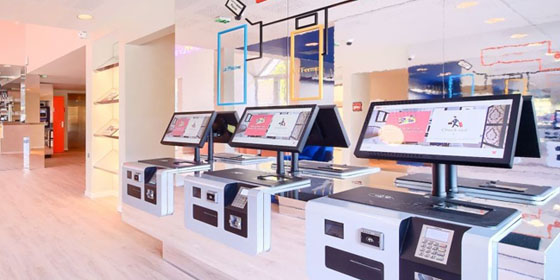
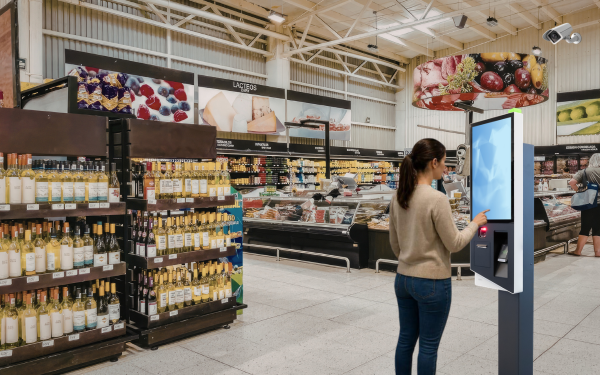
This is changing how and where cameras are deployed. A great example is having them integrated into self-checkout kiosks, where they can identify misscans, duplication, incorrect bagging etc, as well as providing a very obvious deterrent.
What these AI-enabled cameras are doing is turning captured video feeds into actionable data. And that’s where the applications far beyond security come in. Smart cameras can just as easily identify when a queue is forming and automate notices to staff to open more checkouts, simultaneously improving the customer experience and helping to optimise staffing levels. Cameras can monitor customer interactions, at POS, kiosks and at the shelf, and deliver contextually relevant messaging, be it upsell recommendations, offers of assistance, or choosing a relevant advert or promotion to show on the nearest digital screen.
In these ways and more, computer vision AI can unlock more responsive customer experiences and improve operational efficiency for bricks-and-mortar retailers. But alongside the cameras and the AI software itself, there’s a third ingredient that is absolutely vital for unlocking these advantages. Edge computing.
Why Edge Computing Makes All the Difference With Camera AI
Edge computing is the silent partner in the AI revolution. It’s not particularly glamorous – it’s all about where and how data gets processed. Specifically, it means taking data processing back out of distant data centres, and allowing at least some part of it to happen in local servers again, or what is now characterised as the ‘edge’ of a data network.
It might sound technical and stuffy. But this question of where data processing happens is critically important for AI, and for computer vision AI in particular. That’s because of the volumes of data involved, and the speeds of response you want to achieve.
Video feeds are data-heavy. Depending on frame rate and compression, a single security camera with a 1080p resolution produces 35-40GB of data per day on average. That’s a lot to be sending to a remote data centre for processing. Especially multiplied across a large array of cameras.
The biggest risk is latency. The more data you transport across a network, the bigger the bandwidth you need. Streaming lots of video data across long distances can cause the data equivalent of a traffic jam. There simply isn’t the available bandwidth to handle the volume of data traffic. You get bottlenecks and snarl ups, slowing everything down. By the time data from a camera is sent to a distant data centre, processed by AI, returned and interpreted into action, a couple of seconds might have elapsed.
It doesn’t sound much. But it’s enough time for a customer to have walked away before a targeted promotion displays on a screen next to where they’d just been browsing. Or for a shoplifter to be making for the doors by the time the alert is raised. Flagging a misscan at a self-service checkout two seconds after the fact will only cause confusion.
To get the benefits of computer vision AI in stores, you want a near instant response. That’s what makes edge computing essential. With what is widely referred to nowadays as edge AI infrastructure – local servers dedicated to running AI software – you eliminate the latency risk and shorten the time lag between data capture and action to as close to zero as possible.
Speed leads to slick, in-the-moment experiences and efficient responses. There are other advantages to edge AI, too. It avoids the risk of network interruptions, which can bring cloud-based IT systems to a standstill. Edge-based IT continues to operate independently of wider networks, maintaining performance even when connectivity is disrupted.
There is also a question of scalability. As you deploy more cameras and intelligent devices, edge computing distributes the processing load, making it easier to scale without major changes to underlying infrastructure. This can significantly reduce the total cost of ownership and simplify deployment, especially when you start connecting AI camera arrays across multiple stores.
Enabling the Next Generation of Intelligent Stores
Looking forward, we can expect to see more and more uses for computer vision AI in retail. Smart cameras are already being used to replace barcode scanners at POS, particularly at self-service kiosks, by identifying items visually instead. The idea is that AI can register items faster and with fewer errors than traditional scanners.
From a security perspective, cameras could similarly be used to register items as people take them off the shelves. This would immediately flag attempts at shoplifting if those items were not then paid for. It could also fuel the next phase of ‘checkout-free’ store formats like Amazon Go, where customers have to scan a payment app on entering a store, and then automatically get billed for any goods they take. Computer vision AI is also a critical ingredient in biometric ID systems, which are emerging as a cutting-edge trend in payment authorisation.
Edge infrastructure will only grow in importance as use cases for AI in stores expand. And that won’t all be to do with computer vision and cameras, either. From personalised recommendations at checkout to conversational kiosks, or automated management of everything from inventory systems to digital signage content and shelf displays, AI is driving the next phase of digital transformation in physical retail. Edge computing lays the foundations for building this smarter retail future.