
In this recent post, we explored the growing trend for blending digital and physical experiences in retail. Through strategies that support and encourage shoppers to use their phones more in store, adding more digital touchpoints and offering blended ordering and fulfilment options, breaking down the once rigid barriers between online and offline channels reflects how modern consumers behave and helps to meet their expectations for flexible, convenient shopping journeys.
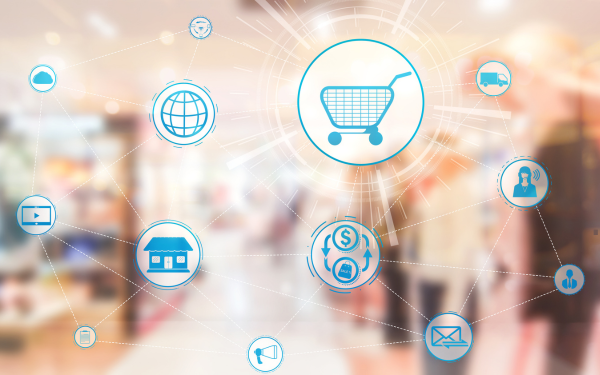
Away from considerations about CX, this merging of the digital and physical can be seen in back-end operations, too. In particular, we’re seeing the emergence of the unified commerce platform – a single piece of software that combines in-store POS and ecommerce in one.
But what exactly does merging POS and ecommerce into a single platform mean for retailers? What are the benefits?
The Shopify Effect
The leading proponent of unified commerce to date is Shopify. Shopify has done much to transform retail. As the first no-code content management system for ecommerce stores, it has over the past 20 years helped millions of small digital vendors get their online businesses off the ground. Nowadays, it’s equally as popular with large enterprise retailers. And it also provides POS solutions to a growing number of businesses worldwide.
Shopify launched its first POS software in 2013, with a major revamp to improve cross-channel integration coming in 2020. And that’s where the unified commerce story really starts.
Shopify rebuilt its POS platform to meet what it saw as the demands of omnichannel retail. Anticipating the convergence of digital and physical, it did something revolutionary – it put all the tools you need for in-store POS and ecommerce in a single platform. And it has continued to pursue the theme of channel convergence ever since. In the last couple of years, it has become a major enabler of social commerce, with plug-and-play checkout and store integrations for Facebook, Instagram, TikTok and Pinterest.
All of this convergence raises some interesting questions. If, as Shopify allows, you run all your channels from a single platform, when do they stop being separate channels at all? That’s the whole point of convergence, after all – a single window, a single inventory, a single customer database, a single payment and accounting platform. When does that become one single unified channel? Are we, in fact, seeing omnichannel being replaced by unichannel – and what does that mean?
A new role for in-store POS?
There’s more than just semantics at stake. Despite the omnichannel concept encouraging retailers to think of all customer touchpoints as equal and do their best to make the connections between them fluid and seamless, they’re still managed as separate entities. But if your web store and physical store are run from the same platform, that’s no longer the case. Yes, they have their own unique characteristics that should be embraced as complimentary strengths. But operationally, what’s the difference? If you have one platform and one set of tools for all, there are fewer barriers to thinking creatively about how they interact and work together. And that opens the door to exciting possibilities.
The most obvious practical benefit is simplification. Converging all your sales channels into a single operating system is just easier. To borrow a phrase from software development, it allows you to ‘build once, deploy everywhere’. One inventory update applies to the whole system. One set of price changes. One promotional run.
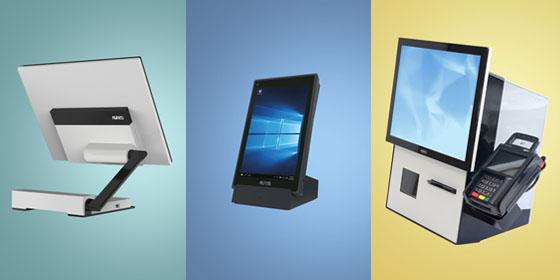
From a physical retail perspective, it’s interesting to consider where the seat of control for this unified system might be. To manage content and features on a web store, you need computer access, i.e. via a PC, a laptop, a smartphone etc. But if POS and ecommerce are unified, you bring another touchpoint into the mix. Your in-store POS hardware.
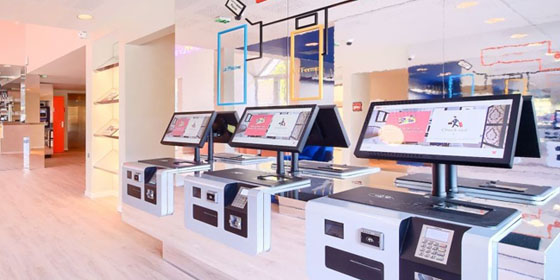
We’ve already seen POS evolve from straightforward transaction processing into a hub for managing all in-store operations. Unified commerce tech brings online operations into the mix, too. You can have staff adding SKUs or updating inventory online as they do so for the store systems. Instead of needing a bespoke interface, you can connect in-store kiosks directly to your digital product catalogue. Staff can post social updates throughout the day, highlighting hot selling items and turning these into targeted online promotions.
For smaller retailers in particular, it removes one of the challenges ecommerce has always posed – duplication of effort, the fact that as soon as you launch an ecommerce operation, you’re running two stores instead of one. Unified commerce platforms erase that duplication. Managing digital and physical channels in tandem is more efficient, it improves oversight across the business, and it makes it easier to create the kind of blended ‘phygital’ experiences customers now expect.
Plus, after years of debate about whether digital commerce will make physical retail obsolete, perhaps the unified commerce trend points in a different direction. Thanks to the convergence of ecommerce and POS, retailers will be able to run their entire empires from their store systems once again. Even if it’s just a case of web stores being managed by staff from the shop floor, it brings ecommerce back into the physical realm.