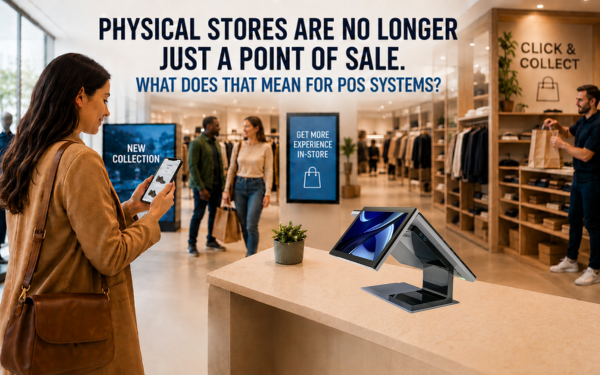
There was a time when the rise and rise of ecommerce was seen as an existential threat to bricks-and-mortar retail. But while few would make such a claim today, what is undeniable is that digital retail has changed its physical cousin. And we continue to see that transformative influence in action today.
Physical stores used to represent the dominant retail model by some distance. The likes of mail order catalogues and door-to-door sales trailed a long way behind in their wake. To apply modern terminology to it, the store was where the entire customer journey took place. Shoppers had to go into a shop to browse the shelves, pick their items, and pay for them. Stores were, then, the primary point of sale.
Digital commerce changed that. It created a more convenient alternative. In the smartphone era, people have been able to browse, choose and buy from anywhere.
Still, physical retail has survived. And it has done so by adapting its role. Stores are no longer the dominant site of purchase. But they have found other ways to stay relevant – even essential, you might say – in the complex web of modern customer journeys.
So what exactly is the retail store’s role (or, more accurately, roles) these days? And if a shop is no longer just a point of sale, what does that mean for POS technology?
Building on the in-person experience
One of the things that has ensured the survival of physical retail is that consumers still value the in-person shopping experience. They like to be able to see, feel and try products before buying. They like the fact that they get their items immediately, rather than having to wait for delivery. They like the recreational and social aspects of a day out at the shops.
Indeed, these factors lead to consumer surveys consistently finding that people prefer shopping in physical stores to online. One recent example put the difference at 38% versus 23% globally, with the rest having no particular preference. It also found that consumers really want retailers to lean into the experiential aspects they value, with 29% saying they’d like to see more ‘interesting’ experiences such as greater use of VR and AR, more events, and more in-store amenities like cafes.
Retailers recognise the importance of meeting these expectations. In a survey of store operators this year, the list of retailers’ investment priorities included creating more digital engagement opportunities, using more creative visual storytelling and better integrating technology to provide ‘endless aisle’ product selections.
The key here is that engaging experiences are not just nice-to-haves. At their most effective, they play a direct role in influencing purchase decisions, increasing conversions and encouraging repeat visits. It’s all about giving customers a reason to head into a store.
Where online and offline retail come together
We talked about how in the past a store would be where an entire customer journey took place. And that journey would not start until the customer stepped into the store, or perhaps saw something that caught their eye in the window display.
That’s no longer the case. Customers are very likely to have already researched products online, compared prices and perhaps even checked availability before they make the decision to head to a store. It’s now the norm for shopping journeys to start outside the store. And flit fluidly between digital channels and physical spaces.
As a result, the physical store takes on a unique role as the point where these online and offline branches converge.
We see this clearly in services like Click and Collect, which pairs the convenience of ordering online with the immediacy of in-person fulfilment. It’s a winning strategy for both consumers and retailers – between 30% and 40% of customers collecting an order from a store make an additional purchase during the same visit. That’s a significant value add. Not surprisingly, 38% of retailers say they are prioritising store designs that better support in-store pickup in 2026.
Another example is the role stores now play in wider online fulfillment. Store inventory is not just used for click-and-collect online orders, but to ship local deliveries direct from branch, saving on transportation distances from larger distribution centres and cutting last-mile delivery costs.
Integrating digital and in-store inventory also changes what happens when a product is out of stock in one location. Not available no longer has to mean a lost sale. The customer can still complete a purchase in-store, and either arrange to collect from another location, or have items delivered to them.
POS to support the whole store journey
When stores primarily functioned as a point of sale – without the wider emphasis on customer experience and engagement, joined-up omnichannel journeys, flexible fulfilment etc that we see today – POS systems themselves could reasonably be defined as transaction-processing devices, and little more.
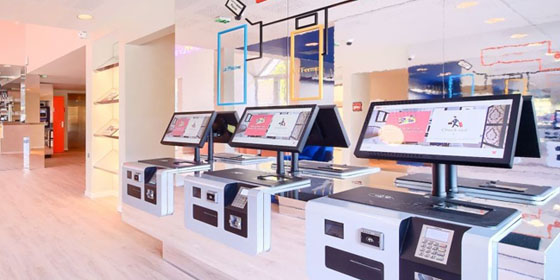
Like the store, POS technology has taken on a much wider remit. As well as payments, modern POS systems must support collections, returns, exchanges, and loyalty programmes. They must allow inventory searches across the whole business, and have access to up-to-date information. And they have to cater to different types of users. One of the most important experience-focused innovations in physical retail has been the rise of self-service. POS must therefore also connect the customer with information they need to answer queries and make purchase decisions.
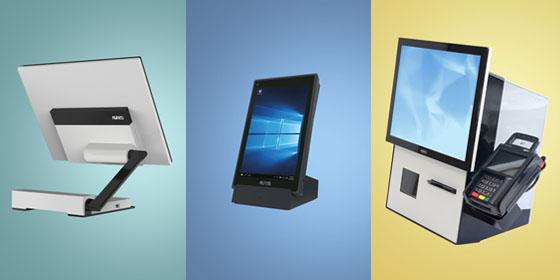
One of the biggest impacts of this diversification in purpose is that there’s no longer just one type of POS touchpoint. POS hardware has itself changed and diversified. In our next post, we’ll look at the different types of POS equipment that you now expect to find in most stores, and match them to the roles they play.