
Few sectors of the consumer economy have been able to boast growth rates over and above inflation in recent years. But one that can is Quick Service Restaurants (QSRs).
Despite the much-discussed cost of living crisis and the impact it has had on personal budgets and spending habits, the UK’s love of fast food is undiminished. According to industry analyst Mintel, the country’s QSR sector grew 5.7% YoY in 2025 to reach a value of £40.5bn. It’s forecast to add another $10bn by 2030.
You can find various explanations for this resilience. One is that, even at a time when people are tightening their belts, they still refuse to deny themselves the little luxuries that bring them pleasure. Food and drink is a main focal point. That daily Costa coffee, or a family takeaway on the weekend, might not be necessary purchases. But they are small indulgences people are loath to give up even in difficult circumstances.
But QSRs are not the only option for enjoying a favourite meal or a tipple of choice. The sector’s fortunes contrast sharply with the casual dining and full service restaurant sectors, which shrank by 4.4% YoY in 2025. This could be explained as demonstrating a trend of consumers ‘trading down’ from dining out in response to wider budgetary pressures.
But consumers at large are clearly not ready to ‘trade down’ as far as giving up on dining out altogether. The QSR market continues to grow faster than grocery, even though menu prices have increased at nearly double the rate of grocery inflation (8% vs 4.5%). The restaurant experience still matters to people.
But it would be wrong to cast QSRs’ success as merely a happy accident stemming from the fact that it offers a compromise between dine out luxury and complete self-prep frugality. It’s no coincidence that, out of all food and beverage sectors, QSRs have been the most ready to embrace innovation in service formats and technology.
Putting the customer in charge
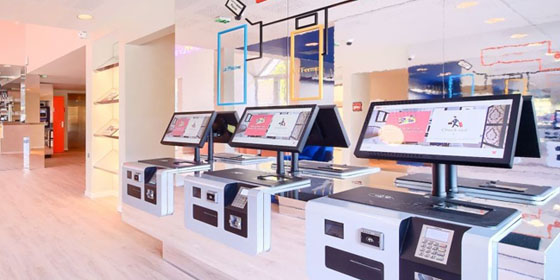
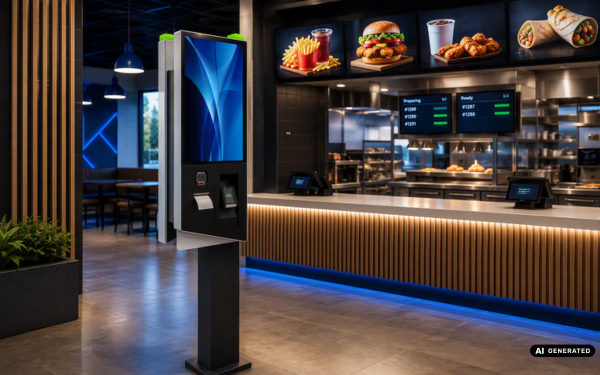
QSRs’ role as the case study par excellence for self-service kiosks is well documented. Not only were some of the biggest name fast food chains among the earliest adopters of self-service technology, they were also the first to realise its potential beyond cutting wait times. Much more than simply increasing throughput, the now ubiquitous self-ordering stations in QSRs have led to an increase in average order value (AOV). When people are given the time and space to choose what they want on their own terms, including customising their orders the way they really want, they spend more.
Self-ordering kiosks are one example of how fast food restaurants have used technology and format innovation to redefine and reinvigorate one of their traditional strengths – convenience. Others include the expansion of fulfilment options, from embracing delivery apps to the rapid expansion of drive thru. QSRs have also been at the forefront of developing their own apps, giving customers even more choice and flexibility in how, when and where they place orders, with added benefits like the integration of loyalty programs.
The scale and success of this appetite for innovation in customer-facing touchpoints deservedly earns the QSR industry a lot of praise. Today’s digitally-native, mobile-first consumers are used to having a world of options at their fingertips and expect to be able to find and get exactly what they want, their way. The continued growth we see in fast food has a lot to do with operators being able to meet those expectations.
A blueprint for integration
Less talked about and certainly less visible is how well QSRs have adapted operationally. Handing more choice, convenience and flexibility to customers falls flat if you cannot at the same time maintain service standards. People choose fast food outlets and takeaways because they want good food served promptly. They won’t spend more through self-ordering points if the service is slow or there are mistakes with their customised order. They also expect and demand reliability. The more touchpoints you have, the harder it is to meet those expectations consistently.
QSRs have met this challenge because they have understood the importance of operational alignment and systems integration. We talk a lot about the evolving role of POS and how it provides a ready-made hub for aligning transactions, inventory, customer data and fulfilment across channels. But for restaurants, the critical workflow is food preparation. A typical fast food outlet today might have orders coming through on-premise kiosks, drive thru, customer apps and delivery services. Coordinating how all those meals are prepared and made ready for collection in the right place, including for delivery, is a major logistical task.
QSRs have responded by expanding the POS footprint. Kitchen Display Systems (KDS) sit parallel to the traditional POS, connecting to all ordering touchpoints at one end and inventory systems at the other. But while POS handles transactions and CRM, the KDS manages the food prep workflow – what is the order, where has it come from, where does it need to go and when. It’s the critical interface between front-end operations (i.e. orders) and the kitchen engine room, organising the logistics of how to get the right meals to the right customers at the right time.
More than any other consumer-facing industry, QSR has embraced digitisation right across its operational footprint to deliver an experience that’s in tune with modern consumer expectations. In doing so, it has laid down a blueprint for other sectors to follow.
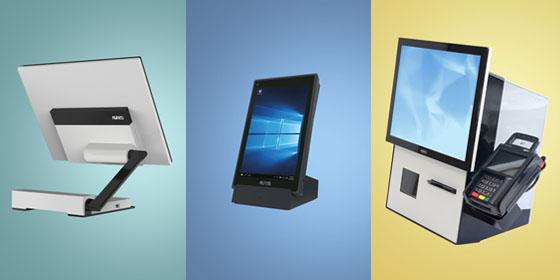
From kiosks to digital menu boards to KDS, digital hardware plays a central role in supporting QSR innovation. Get in touch with the ADVANTECH-AURES UK team to find out more.