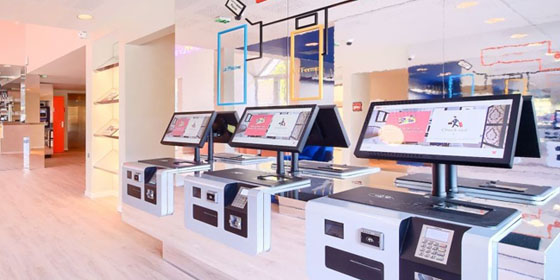

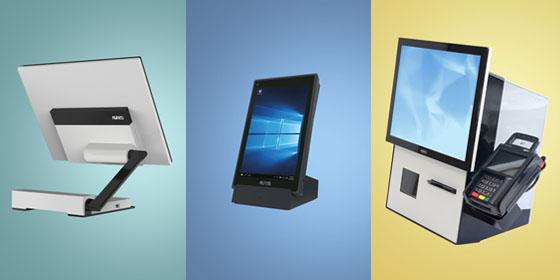

Modern retail or hospitality businesses are awash with technology. From flexible checkout options to digital screens, data-driven personalisation to end-to-end process automation, digital technology has transformed how customer-facing businesses operate, and the experiences customers get as a result.
No one doubts the benefits tech brings. But the faster service, improved efficiency, enhanced customer engagement and all the rest can come at a cost. Given the pace at which technology evolves, a lot of retailers and hospitality operators find keeping up hard. Moreover, as they race to keep up with the latest trends, they find themselves mired in more and more technical and operational complexity, often to the detriment of what they wanted to achieve by adopting new technologies in the first place.
Analysts sometimes describe this as ‘technical debt’, or the difficulty of constantly updating old systems to embrace new technologies. According to one study that asked businesses about their experiences adopting new tech, 60% of retailers cite integration difficulties as a major barrier to innovation, and a third of retailers describe their systems as fragmented.
There are many examples of how this hinders day-to-day operations. For one, it is almost taken for granted these days that in-store software systems should work in the cloud via WiFi connections, and businesses often turn to adding new apps and endpoints when they want to enhance CX in some way. But one in three shoppers have reported being unable to access loyalty and reward apps in store, and 22% have experienced mobile payment failures, because of poor connectivity.
Similarly, as the race to harness AI in on-premise operations hots up, 43% of retailers cite a combination of fragmented systems and budget constraints holding them back. And a third of retailers are struggling to manage inventory across multiple channels.
Getting back to basics
What many of these issues boil down to is businesses trying to move too fast, too soon with digital change – and often making changes for the wrong reasons, too. Why this happens is understandable. Retail and hospitality businesses are under intense pressure to mitigate cost rises with efficiency gains, and to win customer attention and loyalty in ultra-competitive markets. It can feel like there’s no time to consider whether self-service kiosks or dynamic digital displays are the right fit. Businesses feel pressured to adopt first, then ask questions later.
But this leads directly to the kind of fragmentation, spiralling complexity and operational pitfalls retailers and hospitality operators describe. How technology fits together and contributes to a successful whole is a fundamental question that needs to be answered before any purchase and implementation. As a majority of retailers report, when you start to struggle with integration, you also fall behind on innovation.
The answer is not to rush headlong into tech adoption, but to approach things in a more strategic and considered way. And along with that, to approach digital transformation not just as layering on more and more technology, but prioritising how to make business operations simpler, slicker and more efficient.
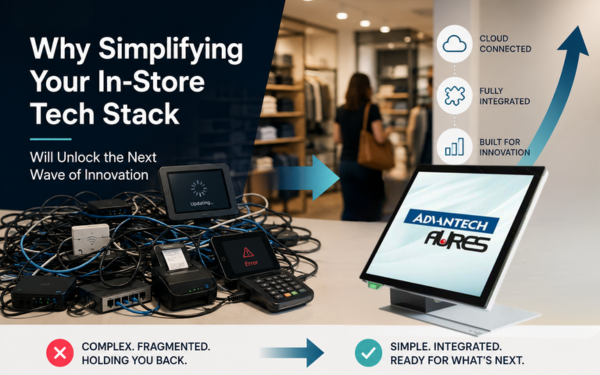
Call it a ‘less is more’ approach, call it getting back to basics, but the most successful examples of digital transformation in retail and hospitality these days actually aim for a simpler tech stack, not just more technology. Successful innovation emerges from solid foundations – reliable hardware, robust infrastructure, compatible and fully integrated systems. Piling on new technology without due care and attention makes further change incrementally more difficult (and expensive), because it becomes harder and harder to see what you have and how it all works. And poor integration likely creates operational stress in your systems, too.
The starting point isn’t asking what new technology to add. It’s looking at your current technology stack, assessing what it can do and can’t do, asking what you want it to do based on your business goals, and then working out how you can best add the capabilities you want in a stable, easy-to-manage way.
Prioritising these basics and building in small, incremental steps isn’t playing it safe. By avoiding complexity, you avoid risks like unnecessary duplication, data silos and fragmented workflows. By keeping things simple, you make it easier to introduce the capabilities you want, and increase the likelihood that they will deliver on what you need. In our next blog, we’ll look at how to approach that in practice.