Merchandising is one of the great artforms of retail. It starts with choosing what products to sell in the first place, which requires understanding of the market and your particular target customers. But from there, it progresses into how products are presented – the aesthetics of display, the strategy of product mixes, the subtleties of place and position.
In the context of bricks and mortar stores, merchandising is also founded on a limiting principle. Shelf space is finite. Choices and compromises have to be made when deciding what to display and what not to. Getting those decisions right has a huge impact on driving sales, whether it’s making it easy for customers in a hurry to grab what they’re looking for, or delighting the casual browser with new discoveries.
But for all the successes, you can never get it right every time. There will always be something someone wants that you don’t have on shelf. When you can’t have everything out at a time, that’s inevitable.
In the past, not having an item a customer wanted on the shelf would often mean a lost sale. But stores are no longer just finite physical spaces. Digital technology is, metaphorically speaking, breaking down the walls. And one of the best examples of this is the concept of the endless aisle.
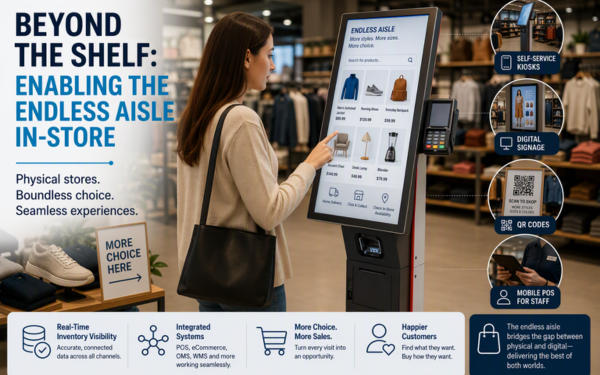
The endless aisle is a great example of ‘phygital’ retail in action – physical stores augmented by digital technology to create experiences that blend the best of both realms. In this case, the endless aisle is all about overcoming the boundaries of physical shelf space, and presenting in-store shoppers with the theoretically boundless choice of goods they can access online.
Making that work, however, takes more than installing some screens and connecting an online product catalogue. More choice only means more value if the digital shelf is user friendly and feels like a natural extension of the in-store shopping journey. Even more importantly, giving people more goods to find only makes business sense if they can buy them, regardless of whether they are physically available or not.
Bringing inventory data to the shop floor
The endless aisle concept is ultimately built on inventory data. The stock a retailer can fit on the physical shelves in any given store is rarely the sum of their entire inventory, especially with multiple stores and ecommerce operations factored in. So the endless aisle is about showing what doesn’t fit on the physical shelf.
To do that, you need inventory data to be accurate and consistent everywhere it is used. Or in other words, you need an integrated inventory system and a joined-up approach to stock visibility. For a customer in a store to see exactly what is available across the business at any one time, POS, ecommerce platforms, order management, warehouse and inventory systems all need to exchange data quickly and seamlessly.
Having items incorrectly showing as available is worse than genuine out-of-stock notices. For a customer to go through the process of placing an order, or arranging collection from another location, only to then be let down is deeply frustrating. It turns a missed sale opportunity into damage to your reputation, and perhaps a customer lost forever.
Choosing the right in-store touchpoints
Once you have your inventory data properly coordinated, the next step is how you make that information available in store. The final goal is to allow customers to find extra items and then be able to purchase them by one means or another, whether that’s asking staff to fetch them from the stock room, reserving them from another location, or placing an order for later collection or home delivery.
But before that can happen, you need an interface. There are four main options for bringing the endless aisle to life:
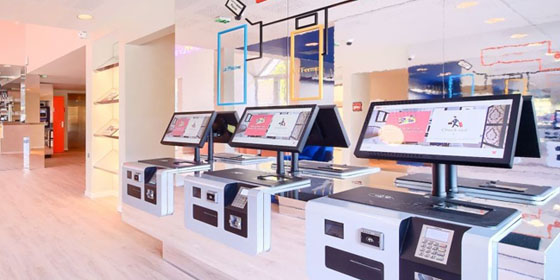
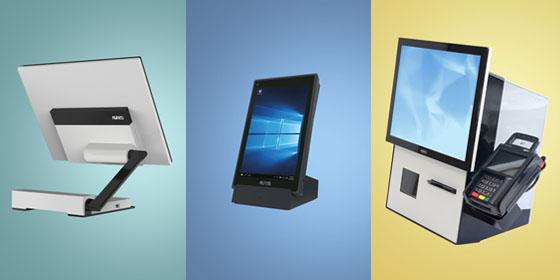
- Self-service kiosks: Kiosks are an easy starter for any business looking to introduce digital aisles into their stores. Many retailers already have kiosks, so it’s simply a case of adding a product catalogue-type UI with suitable search facilities. Kiosks are also familiar to shoppers, they are easy to use, and they help customers enhance their own shopping journey without having to rely on staff assistance, whether that’s looking up extra product details or searching for alternatives they can order. The one drawback is that it’s not always possible to locate kiosks directly next to physical shelves.
- Digital signage: Because of the placement issue with kiosks, some retailers prefer to use digital screens on or adjacent to physical shelves. You can use touchscreens to allow easy controls and interactive search. There are also some great examples of retailers pushing innovation of the endless aisle concept with digital signage, such as ‘smart mirrors’ that use cameras and AR to show customers variations of items they try on in fashion outlets. One drawback is that it would take a lot of screens to make every shelf an ‘endless aisle’ in this way.
- QR codes: The cheapest and easiest way to launch an endless aisle, this involves placing QR codes on shelves which customers can scan on their smartphones, taking them to a product catalogue they can explore. This is an easy way to have endless aisle access on every shelf without having to roll out too many screens. But from a user experience perspective, it makes little sense if every code links to a general catalogue. The real value is having a curated catalogue related to the merchandise on that particular shelf, which means a lot of page building.
- Mobile POS: The endless aisle doesn’t have to be an exclusively customer-led, self-service concept. Many retailers find value in giving staff easy access to business-wide inventory data to use as a customer service tool, helping them to make recommendations or advise on availability. Mobile POS tablets are perfect for this purpose as staff can easily share their screen with customers to show alternatives, and then place orders or make collection arrangements there and then.
The best approach is often to combine several of these touchpoints rather than relying on a single device. For example, while it makes sense to give staff access to the endless aisle as a service tool, only connecting to staff tablets misses an opportunity to upgrade the browsing experience.
The endless aisle may be powered by connected systems and real-time data behind the scenes. But its success depends on the hardware touchpoints customers and staff use to access it. To talk more about the best options for your store, get in touch with the ADVANTECH-AURES team.