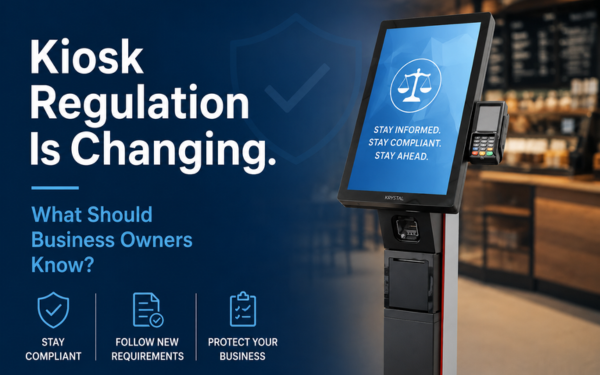
They say that innovation sprints, while regulation crawls behind. But every now and then, perhaps realising it’s about to get lapped, the law suddenly springs into life and tries to play catch-up with a rush of regulatory activity.
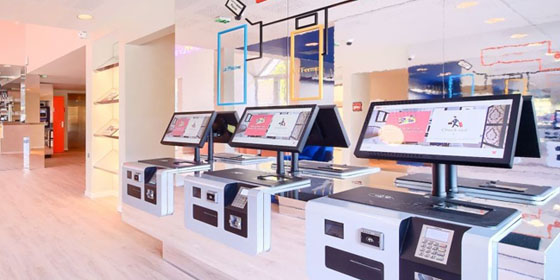
We’re seeing that play out now around self-service kiosks. Kiosks have been a very visible presence in retail, hospitality and leisure for well over a decade now, and their influence on how we shop, dine and play continues to grow. That influence has started to attract the attention of lawmakers. 2026 has seen a flurry of statute proposals across various states, as well as significant court rulings, all of which will shape how businesses use self-service technology going forward.
Here’s a roundup of some of the key things you need to know.
State lawmakers are discussing self-checkout limits
According to Kiosk Marketplace, lawmakers in several states have been discussing possible restrictions on the number of self-checkout kiosks retailers can operate in stores. Rhode Island, Connecticut and Massachusetts have all seen proposals involving kiosk caps, staffed POS to self-checkout ratios and limits on how many self-checkout lanes one member of staff can supervise..
The motivation is partly about protecting jobs. But state governments are also concerned about the rising number of retail thefts associated with self-checkout lanes, and the impact on worker safety.
For retailers, this does not mean self-checkout is going away. But if proposals like these make it onto the statute book, it will add an extra compliance dimension when planning how kiosks fit into your operational strategy. Businesses will need to think carefully about the right balance between staffed lanes, assisted self-service and fully unattended options.
Equal access moves up the agenda
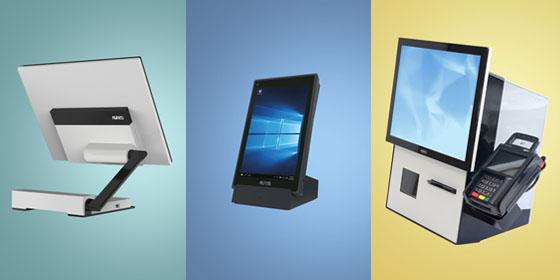
One proposal affecting self-service technology that has already become federal law is the Americans with Disabilities Act (ADA). As part of far-reaching new laws on accessibility, all public-facing kiosks must be usable by people with different needs, including customers with visual, hearing or mobility impairments. That affects hardware design, screen height, reach range, audio support and the usability of the on-screen interface.
Another issue that could soon place regulatory requirements on kiosk design is cash acceptance. Some states and cities have introduced, or are considering, rules that prevent businesses from going entirely cashless. This is in an effort to prevent ‘unbanked’ individuals, or those who do not have access to digital payments, being locked out of retail and services. In terms of how that affects self-service, it could mean many more payment kiosks having to be fitted with cash-loading components.
Digital terms are coming to physical kiosks
Away from Capitol buildings, one recent legal case has paved the way for so-called “clickwrap” agreements common for agreeing terms and conditions online to be used more widely at kiosks.
Beckett v. Bitcoin Depot, Inc. (S.D. Ind. Feb. 2026) centred on a fraud incident where a man was duped into depositing $7,000 in cryptocurrency via a Bitcoin Depot ATM. The plaintiff sued Bitcoin Depot, claiming negligence and insufficient safeguarding against fraud. But a federal judge ruled that the ‘clickwrap’ terms and conditions the plaintiff had agreed to when using the kiosk were legally enforceable and dismissed the suit.
For kiosk operators, this sets a precedent for following the model of terms agreements widely found online. The key is ensuring terms are visible and that agreement is a conscious act, like clicking a button that says ‘I agree’. If a customer must accept important conditions before making a payment, signing up or completing a transaction, the screen flow needs to make that decision clear.
Self-service remains one of the most powerful ways to improve customer experience and operational efficiency. But as adoption continues to grow, the rules and regulations around it will do so, too. As compliance becomes an increasingly important part of the kiosk conversation, businesses that plan ahead will be best placed to benefit.